
Turn Rich Human Responses Into Decisions You Can Defend
AI Agent, powered by inVibe, works directly with your research data, study outputs, and supporting materials, applying the same methodologies our linguistic team uses in their own analysis.
How AI Agent Works
Qualitative Analysis
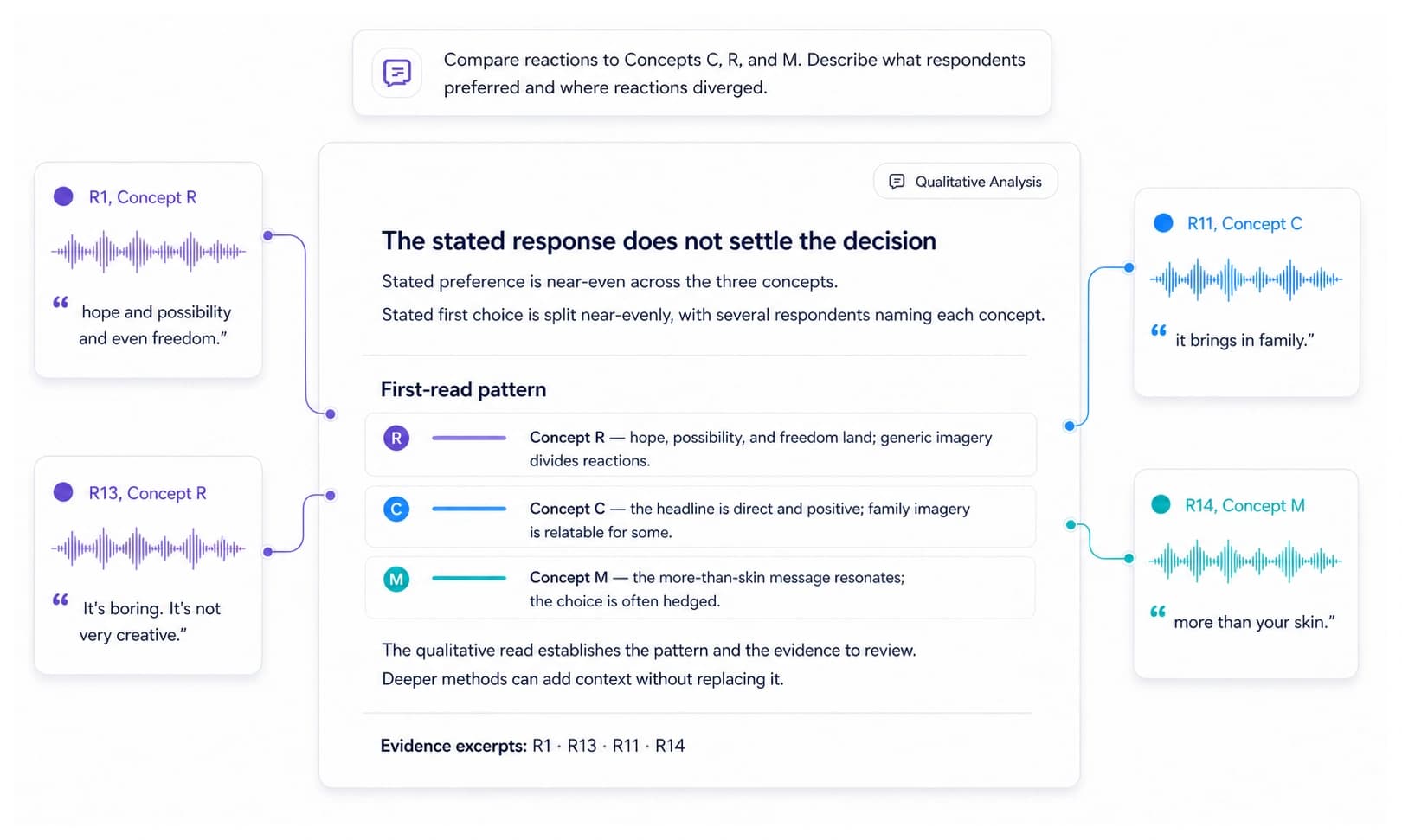
Compare What Respondents Said
Qualitative Analysis gives the team a structured summary of reactions, overall impressions, likes, dislikes, perceived motivation, and the reasons behind stated preferences. It is a useful first read. When concepts come out close, deeper layers can help resolve the decision.
- Compare reactions and stated preferences.
- Trace findings to cited respondent evidence.
Linguistic and Speech Emotion Analysis
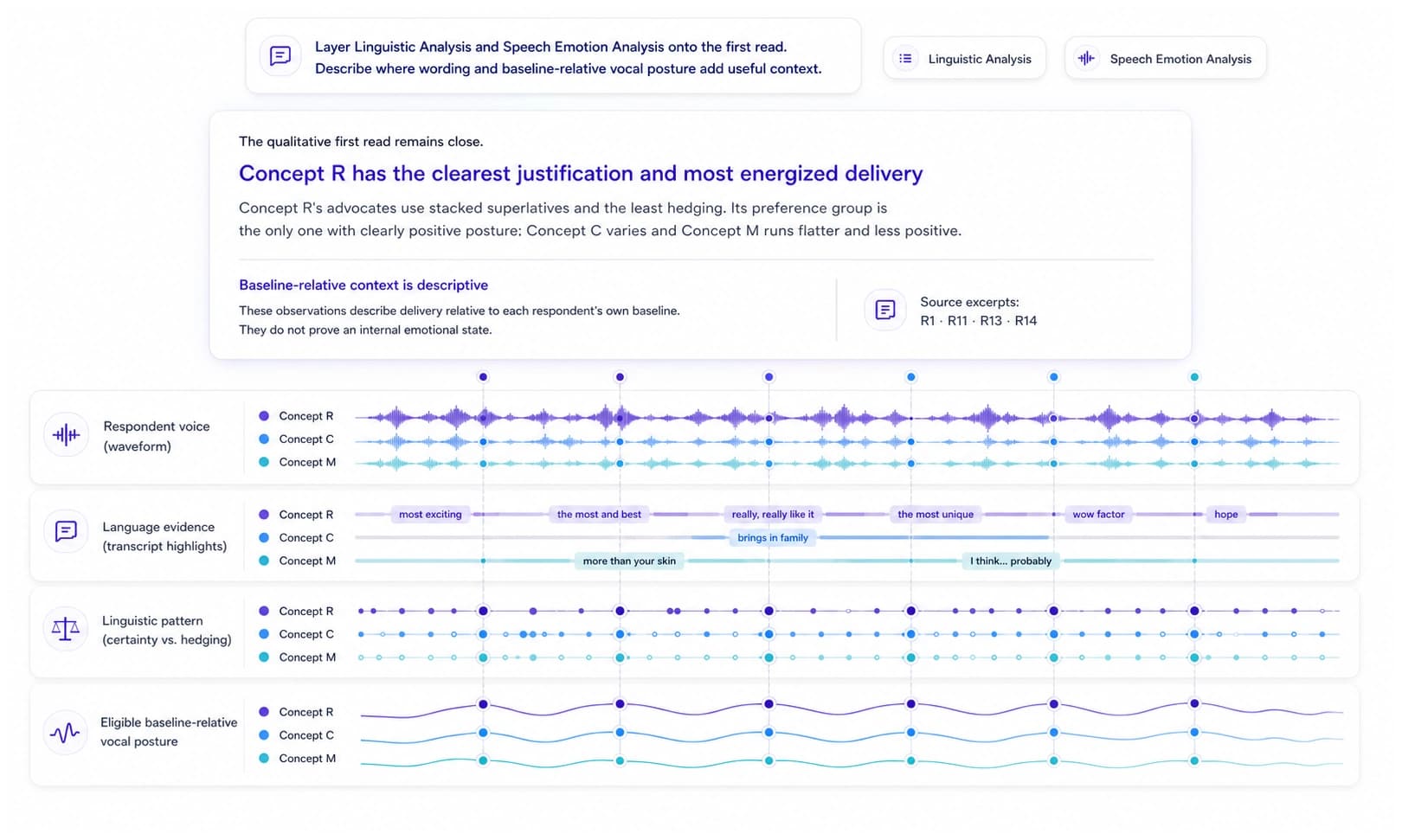
Go Deeper Into Language and Voice
Linguistic Analysis examines wording, framing, certainty, and emphasis. For eligible pre-segmented acoustic data, Speech Emotion Analysis adds baseline-relative vocal-posture observations. Together, these methods add descriptive context without replacing the qualitative read.
Acoustic observations describe how a response sounds relative to a respondent baseline. They do not prove an internal emotional state.
Evidence and Deliverables
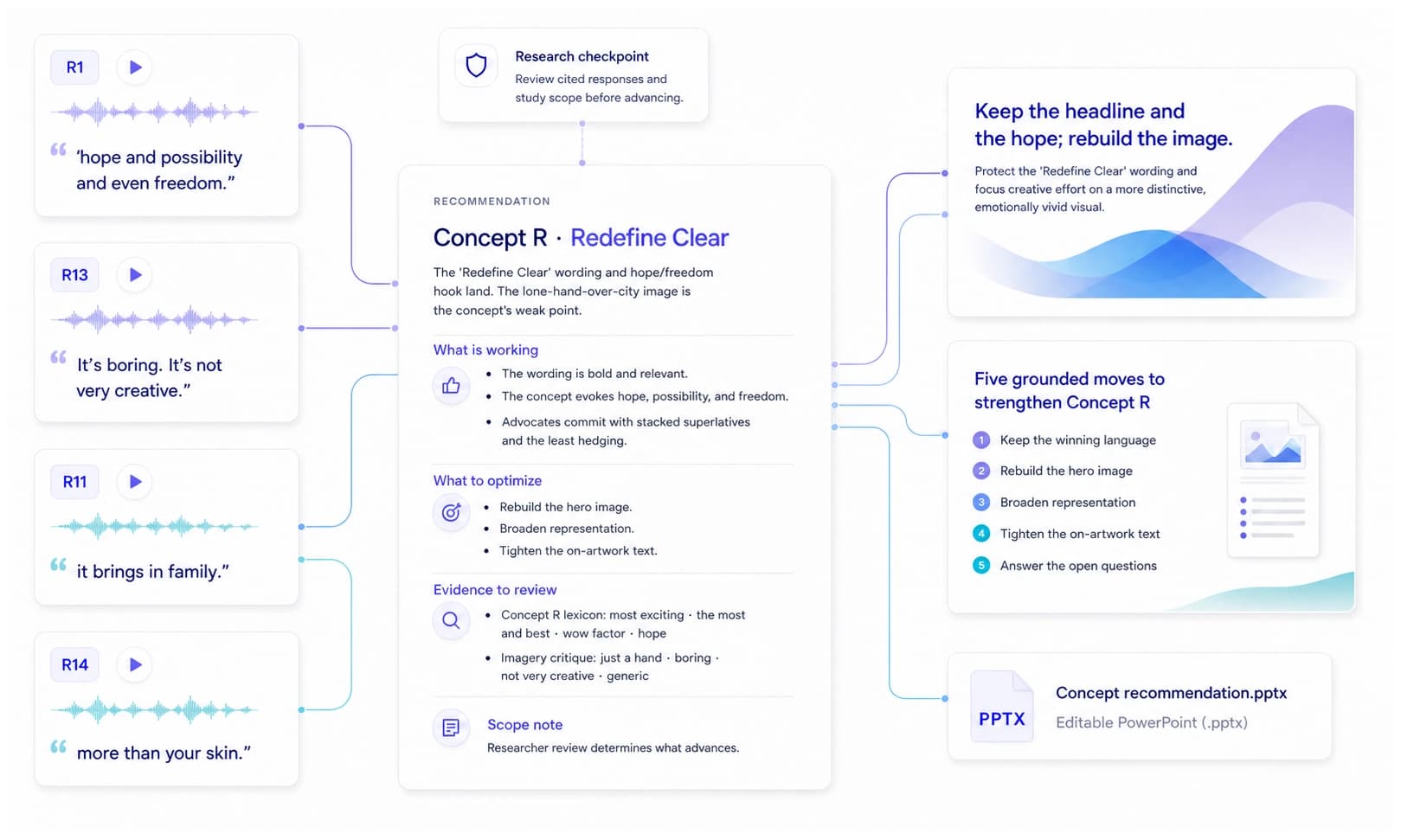
Turn the Analysis Into a Usable Deliverable
Every supported finding is tied back to respondent evidence, so the researcher can validate the interpretation directly. Reviewed work can then become a stakeholder-ready recommendation, including an editable PowerPoint the broader team can use.

Bring One Real Research Question
See What AI Agent Can Do With Your Own Research Data
We will show how AI Agent can keep findings tied to respondent evidence, support researcher review, and carry reviewed work into a share-ready deliverable.
Tell us what you would like to explore. Share the research goal, not patient, participant, study, or other confidential data.